


AC/DC in PV: Inverters and Power Conversion
Introduction: What Does AC/DC Have to Do with Solar Systems?
What does the legendary rock band AC/DC have to do with solar systems? The band name was meant to symbolise raw power and electrifying performances – just like the energetic Alternating Current and the raw force of Direct Current flowing through solar systems.
Power electronics are employed to handle these "raw" currents. In this article, you will learn how inverters work and why the choice between single-phase and three-phase systems matters.
Direct Current Meets Alternating Current
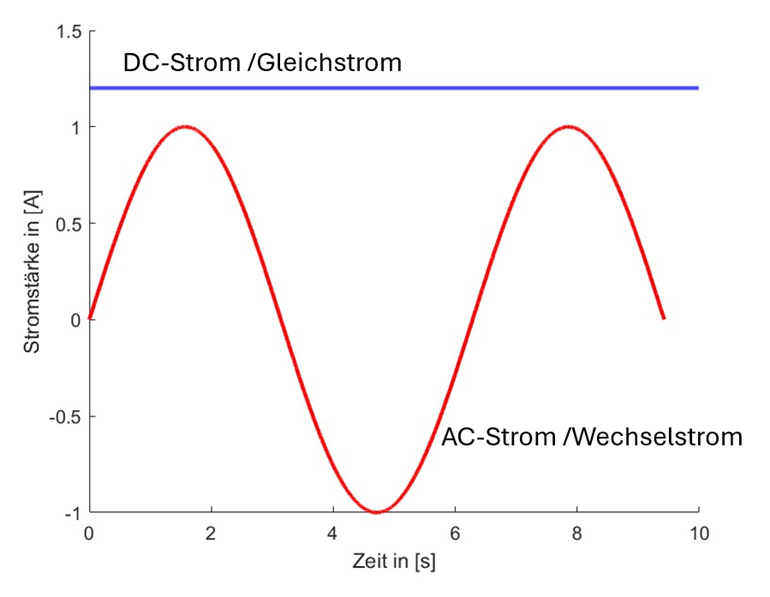
The challenge with solar systems: solar cells generate direct current (DC), but household appliances require alternating current (AC) at 50 Hz. Additionally, battery storage systems use direct current again.
What Distinguishes the Two Current Types?
Direct current (DC):
- Current flows continuously in one direction
- Like a ship sailing only upstream
- Examples: batteries, solar cells, USB devices
Alternating current (AC):
- Current direction changes constantly (50 times per second at 50 Hz)
- Like a ship constantly sailing upstream and downstream
- Standard in the European power grid
The Inverter: Heart of Power Conversion
Operating Principle
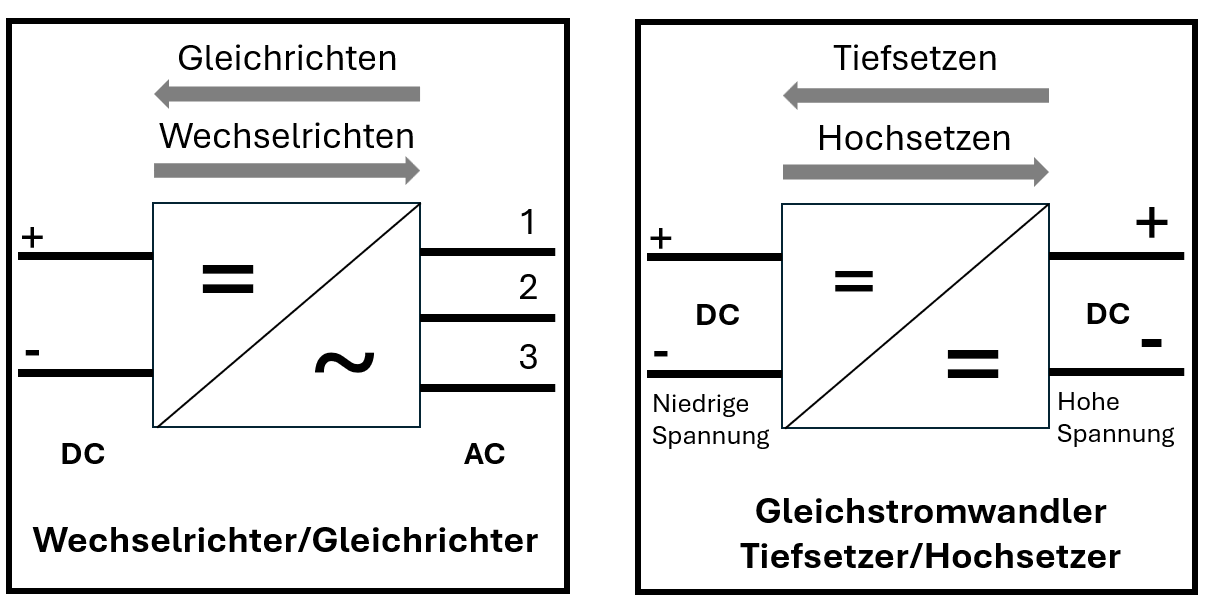
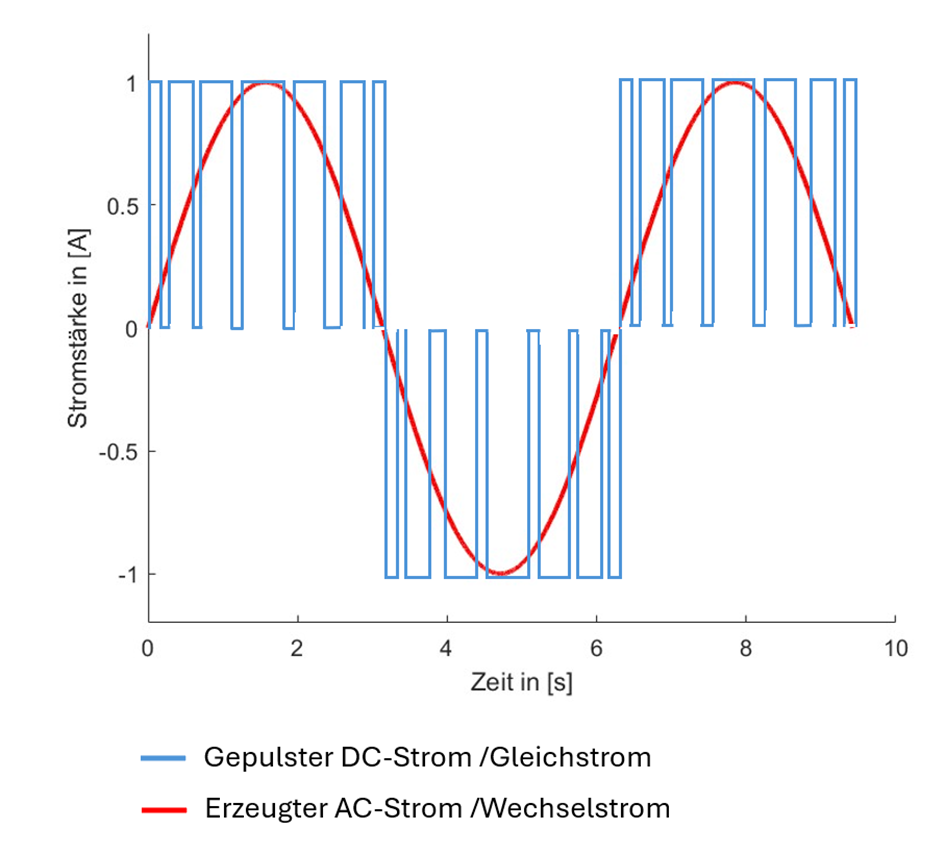
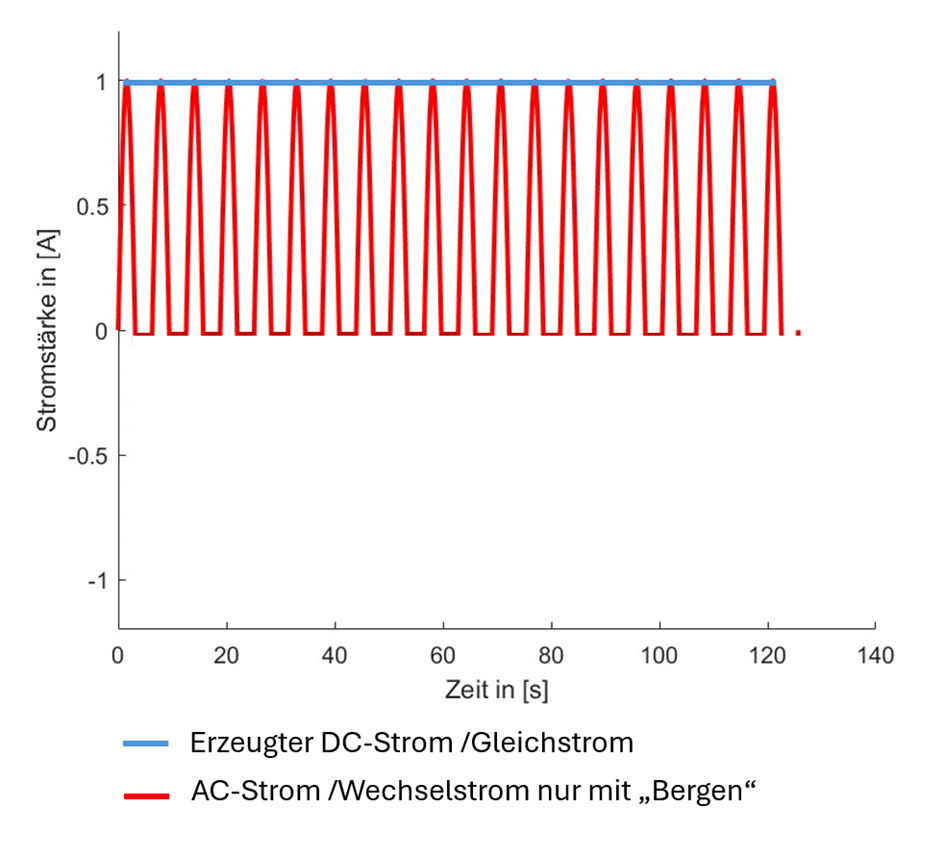
The inverter converts direct current from the solar modules into grid-compliant alternating current. This occurs through electronic switches (IGBTs or MOSFETs) that rapidly switch the direct current on and off:
- DC input: Direct current from the modules
- Chopping: Power switches rapidly turn DC on and off for varying durations
- PWM modulation: Pulse width modulation creates a sinusoidal waveform from the "DC fragments"
- AC output: Grid-compliant alternating current at 50 Hz
Important Inverter Functions
- Grid synchronisation: Frequency and phase are matched to the grid – the inverter shuts down if there is a deviation
- Anti-islanding protection: Disconnects the system during grid outages to protect maintenance personnel
- Voltage and frequency windows: Feed-in only within permissible tolerances
- Power limitation: Many grids require feed-in limits (e.g. 70% rule), implemented via software
MPPT: The Control Centre
The Maximum Power Point Tracker (MPPT) is often already integrated into the inverter. Its task: to consistently extract the maximum possible power from the solar system, regardless of load or weather conditions.
How Does the MPPT Work?
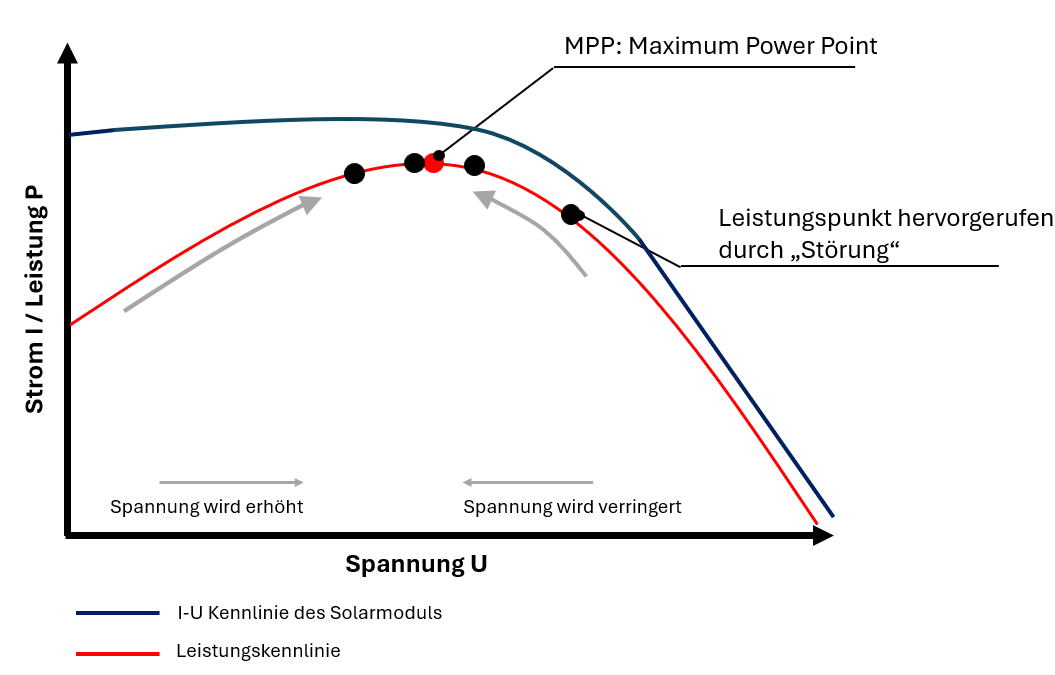
Electrical power is the product of voltage and current: P = U × I
Each solar module has an individual characteristic curve that depends on generated current and voltage. This curve changes due to:
- Shading
- Temperature changes
- Varying irradiance
The MPPT continuously scans the power curve. The widely used "Perturb and Observe" algorithm works as follows:
- Voltage is slightly increased or decreased (perturbation)
- The resulting power change is measured (observation)
- Was power higher? → Continue in this direction
- Was it lower? → Change direction
This way, the MPPT always finds the current maximum power point.
Understanding Three-Phase Power
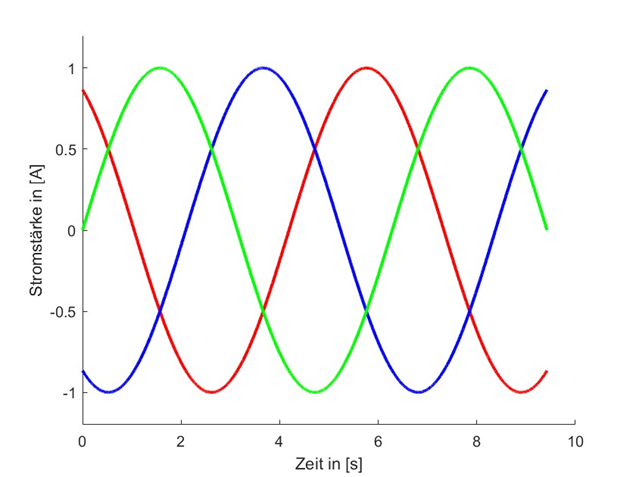
European grids do not use simple alternating current but rather three-phase power (three-phase alternating current). This comprises three alternating currents that oscillate evenly offset by 120°.
Why Three-Phase Power?
Efficiency in power transmission is significantly better:
- Single-phase alternating current requires 2 cables
- Three-phase power requires only 3 cables for triple the power
The trick: at any given moment, the three phases balance out. When maximum current flows in one cable, two half-strength currents flow in the other two cables in the opposite direction. This eliminates the need for a separate return cable.
Voltage Levels in Germany
| Level | Voltage | Application |
|---|---|---|
| Extra high voltage | 220–380 kV | Transmission networks |
| High voltage | 60–110 kV | Regional distribution |
| Medium voltage | 10–35 kV | Industry, urban networks |
| Low voltage | 400 V (three-phase) | Households |
| Socket | 230 V (single-phase) | Single phase of three-phase power |
Single-Phase or Three-Phase Inverter?
The choice between single-phase and three-phase inverters has far-reaching implications for your system.
Single-Phase Inverter
With a single-phase inverter, direct current is converted into a single AC phase. Typical for small to medium-sized systems.
Advantages:
- Simple construction: Only two cables needed for input and output
- More affordable: Lower acquisition costs due to simpler technology
- Compatibility: Many household appliances use only one phase
Disadvantages:
- Limited power: Generally suitable for systems up to 3–6 kWp
- Asymmetric loading: Problems can occur at high currents
- Not for large consumers: EV chargers or heat pumps often require three-phase power
Three-Phase Inverter
A three-phase inverter converts direct current into three symmetrical AC phases. Standard for larger systems.
Advantages:
- Higher power output: For systems from 6 kWp upwards
- Better load distribution: Higher currents are distributed across three phases
- Symmetrical feed-in: More grid-friendly, no phase imbalance
- Compatible with large consumers: Heat pumps, EV chargers, cookers
Disadvantages:
- Higher costs: More complex construction, more expensive components
- More complex installation: Additional safety precautions and wiring
Recommendation
| System Size | Recommendation |
|---|---|
| Up to 3 kWp | Single-phase sufficient |
| 3–6 kWp | Depends on consumers |
| From 6 kWp | Three-phase recommended |
| With heat pump/EV charger | Three-phase |
Rectifiers and DC Paths
When storage or DC coupling is used, rectifiers convert alternating current back into direct current. This is necessary when:
- An AC-coupled battery is charged from the grid
- Surplus grid electricity is to be stored
Here too, high efficiencies of approximately 96–98% apply. Losses occur mainly through:
- Switching losses in power semiconductors
- Filtering of harmonics
Modern topologies reduce these losses with high switching frequencies and optimised filters.
The S in Software Stands for Solar
Beyond hardware, software is essential for controlling the solar system. The software acts as the interface between solar modules, battery, electricity meters and the user.
Tasks of System Software
- Control and regulation: Close cooperation with the MPPT
- Measurement data acquisition: Digital capture and management of all readings
- Data forwarding: Communication between components
- Monitoring: Detection of faults and performance drops
- Cost calculation: Yield forecasts and payback period
- Smart home integration: Connection with home automation
Conclusion
In Brief: Power electronics form the link between solar modules and the household grid. The inverter with integrated MPPT ensures that module DC is optimally converted into grid-compliant AC. The choice between single-phase and three-phase systems depends on system size and connected loads.
Continue reading: In the next article Battery Storage: Your Ally in Poor Weather, everything revolves around energy storage – why it makes solar systems truly worthwhile and how to determine the right size.
Sources
- Verivox: AC and DC Power Differences
- Elektronik-Kompendium: Warum 220 Volt?
- Optivolt: Ein- vs. dreiphasige Wechselrichter
- Peter Hofmann: Hybridfahrzeuge (Springer Vienna, 2010)
- Martin Doppelbauer: Grundlagen der Elektromobilität (Springer, 2020)